
Dermatologist: “Based on the research and what I’ve measured over two decades, almost no dark spot treatment actually reaches the melanocyte — where pigmentation is produced and controlled”
SCIENCE & PIGMENTATION
Verified by leading dermatologists • Tested in ISO-certified research laboratories • Based on analysis of 128 dark spot treatments across 47 brands
You notice it on a Tuesday morning. Nothing dramatic. Just a small shadow on your cheek that wasn’t there six months ago.
You lean closer to the mirror. There’s another one near your temple. And the mark above your lip, the one you were sure was fading, looks darker than it did last week.
You’re using a good serum. Maybe vitamin C. Maybe niacinamide. You wear sunscreen every day. You’re doing everything the magazines tell you to do.
So why do new spots keep showing up? And why won’t the old ones go away?
For twenty-two years, I watched women cycle through brightening product after brightening product. Vitamin C serums that gave a glow for two weeks, then nothing. Kojic acid treatments that lightened a spot halfway, then stalled. Hydroquinone prescriptions that worked for three months, only for the spots to come back darker.
I never had a good answer for them. I told them to be patient. I told them to stay out of the sun. I told them these things take time.
Until last year. That’s when everything I thought I knew about dark spots was turned upside down.
An independent panel of board-certified dermatologists tested 128 dark spot treatments across 47 brands. Not with surveys or “consumer perception” scores. With spectrometry, VISIA imaging, and melanin quantification, the same tools used in peer-reviewed dermatology research.
Out of 128 products, only 5 produced results that lasted beyond six weeks.
The rest all hit the same wall. A few weeks of partial fading. Then nothing. The spots sitting there at 70% of what they were, stubbornly refusing to budge.
The product that ranked first did something none of the others could. It didn’t just lighten the surface. It changed what was happening inside the skin cells themselves. And it contained a compound that proved 4x more potent than vitamin C and 60x more efficient than kojic acid at correcting pigmentation.
This investigation reveals what those five products are, why most dark spot treatments are designed to plateau, and what the science actually says about correcting pigmentation for good.
The Discovery That Explains Why Every Dark Spot Product You’ve Tried Stopped Working
Here’s what most skincare brands will never tell you: dark spots aren’t a surface problem. They’re a three-level problem. And the product you’re using right now almost certainly only reaches one of those levels.
Every morning when you apply your brightening serum, you’re treating the discolouration you can see. But the melanocytes, the cells that produce pigment, underneath keep producing excess pigment. The surface fades for a few days. The overproduction underneath continues.
Here is something dermatologists now agree on that most of us were simply never told: pigmentation doesn’t start at the surface. It starts deep inside your melanocytes, years before it shows up as a visible spot. Research from the past decade, including a 2022 review by the Department of Dermatology at Chungnam National University, has mapped three distinct levels where dark spots are created and maintained, each one requiring a completely different approach.
Surface Level: What You See in the Mirror
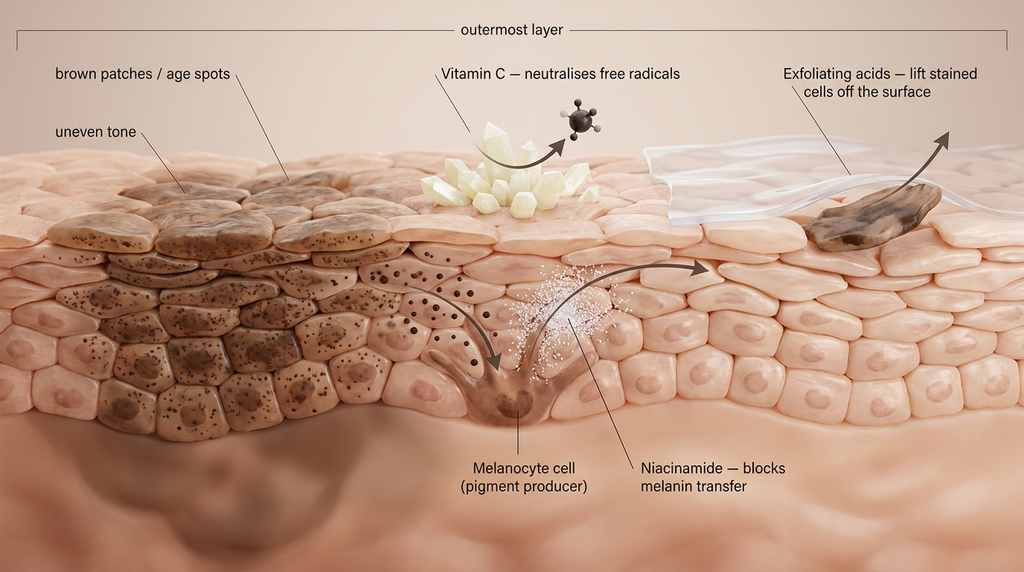
The outermost layer of skin shows the visible discolouration: the brown patches, the age spots, the uneven tone. This is where almost every brightening product works. Vitamin C neutralises free radicals here. Niacinamide blocks melanin transfer to surrounding cells here. Exfoliating acids lift stained cells off the surface here.
These products can make spots look lighter for a few weeks. But they’re essentially cosmetic. Stop using them and the spots come back, because they never touched what’s happening underneath.
Structural Level: The Triggers Firing Beneath
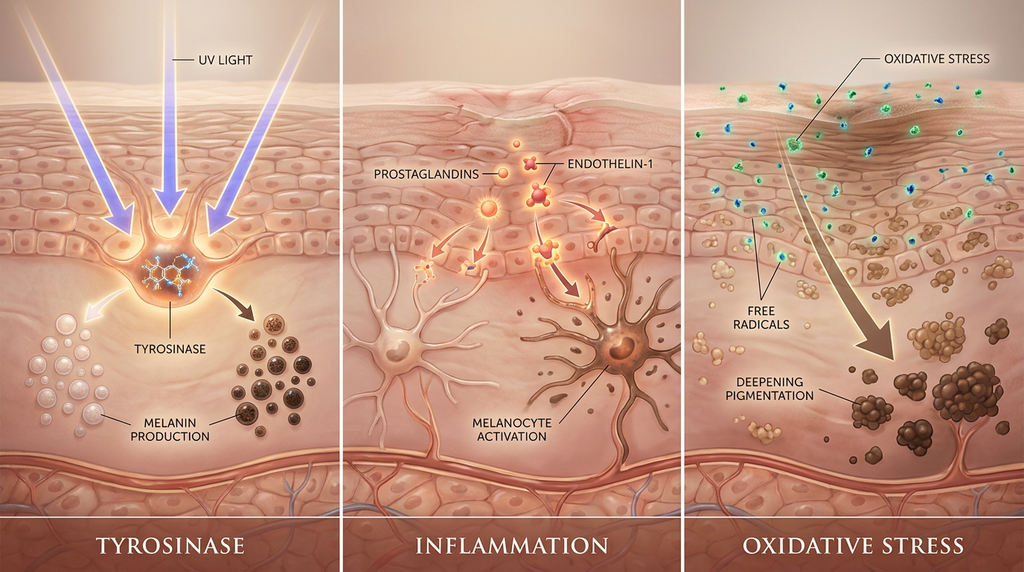
Beneath the surface, three biological triggers are constantly telling your skin to produce more dark pigment, and they operate independently of each other. Tyrosinase, the master enzyme of melanin production, is activated every time UV light hits your skin. Inflammatory signals like prostaglandins and endothelin-1 fire after every breakout, every sunburn, every bit of skin trauma, instructing melanocytes to ramp up pigment production even weeks after the damage heals. And oxidative stress from pollution and UV radiation accumulates over years, quietly driving pigmentation deeper with each exposure.
Most “advanced” dark spot products work at this level. They block tyrosinase. Or they fight free radicals. One trigger addressed, two still firing. That’s why you see partial fading that hits a wall.
Cellular Level: The Root Cause Almost Nobody Talks About
This is where the real story is. And it’s the level that almost no dark spot product on the market even attempts to reach.
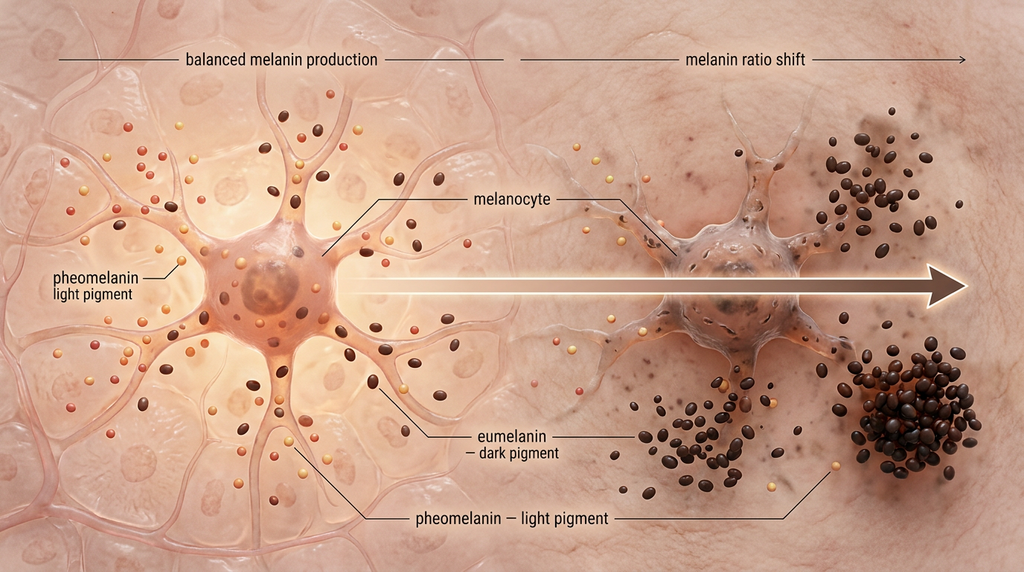
Your skin produces two types of melanin. Eumelanin, the dark, brown-black pigment that forms visible spots. And pheomelanin, a lighter, yellowish-red pigment that gives skin its natural luminosity. In young, healthy skin, there’s a balance between the two.
But with age, hormonal changes, and decades of UV exposure, that ratio shifts heavily toward dark melanin. Your melanocytes aren’t just producing too much pigment. They’re producing overwhelmingly the wrong type.
This cellular-level melanin imbalance is why spots form, why they darken with age, and why they come back even after you’ve faded them. You can block the enzyme. You can fight the free radicals. You can calm the inflammation. None of it matters if the cells themselves are still programmed to produce dark pigment instead of light.
“This is the discovery that changed everything we understood about treating pigmentation,” says Professor Charlotte Weber, MD, Chair of Dermatology and lead of the review panel. “You can block every trigger we know about. But if the melanocytes themselves are locked into producing dark melanin, the spots will always return. The only way to correct dark spots permanently is to change what the cells produce, not just how much.”
The key takeaway is devastating in its simplicity: dark spots are a three-level problem. Surface. Structural. Cellular. Any treatment that only reaches one or two levels will always produce limited, temporary results. The products that scored highest in this evaluation were, without exception, the ones that went deepest.
Why Most Dark Spot Products Are Designed to Fail
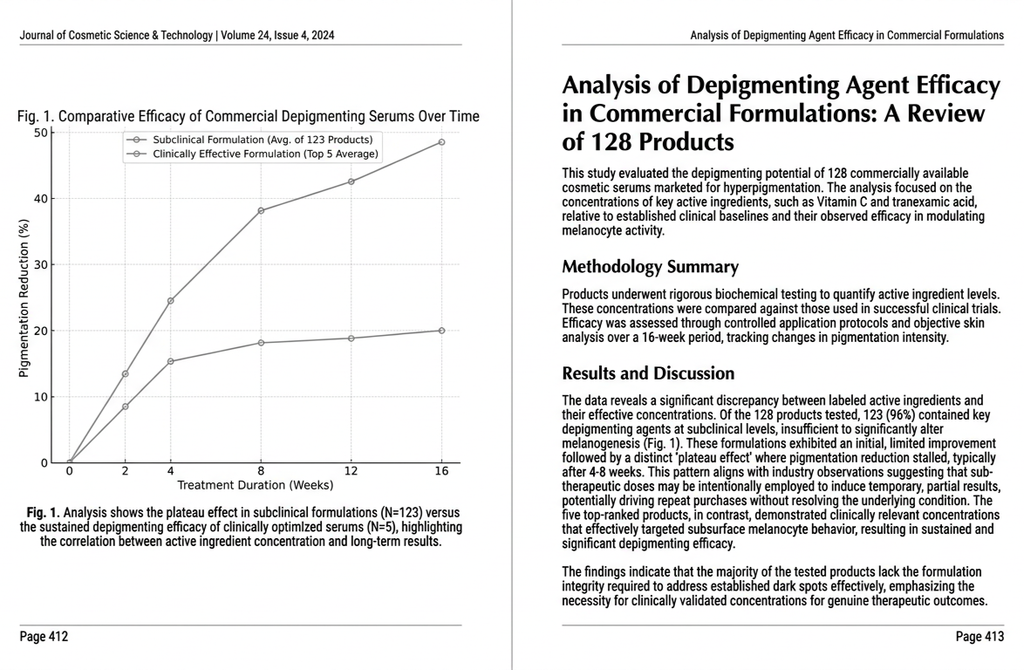
Before revealing the top five, you need to understand why 123 other products failed the testing protocols.
I spoke with a cosmetic chemist who spent 14 years formulating brightening products for major international beauty brands. He wouldn’t let me use his real name. But what he described was difficult to hear.
“Everyone in the lab knows the active ingredients are in there at concentrations too low to do anything,” he said. “The label says vitamin C. The label says tranexamic acid. But the dose is a fraction of what the clinical studies used. It’s there for the ingredients list, not for your skin.”
Then he said something I couldn’t stop thinking about: “If a serum actually corrected your spots, you’d buy two bottles and stop. But a serum that fades them halfway, just enough to give you hope, she’ll repurchase that every month for years.”
“I’ve sat in meetings where executives called it ‘hope in a bottle.’ Because results stall, when her spots stop fading, the customer blames her skin. She thinks she’s just someone who ‘gets dark spots.’ She never suspects the product was built to do almost nothing.”
The panel’s laboratory data exposed exactly this pattern. The vast majority of the 128 tested products contained active ingredients in subclinical concentrations, present on the label but too weak to produce measurable change. Even premium-priced serums retailing at €80 or more frequently showed limited depigmenting effectiveness when measured against the doses used in the published clinical studies they cited.
“That’s why women try product after product and never get their skin back,” one reviewing dermatologist noted. “It was never the woman’s fault. The formula was never built to reach where dark spots actually form.“
The five products that ranked highest all did something the other 123 couldn’t. They worked below the surface, at concentrations strong enough to change how melanocytes behave.
Our Scientific Review Board for This Study
To ensure complete independence, all findings were reviewed by an expert panel with no financial ties to any manufacturer:
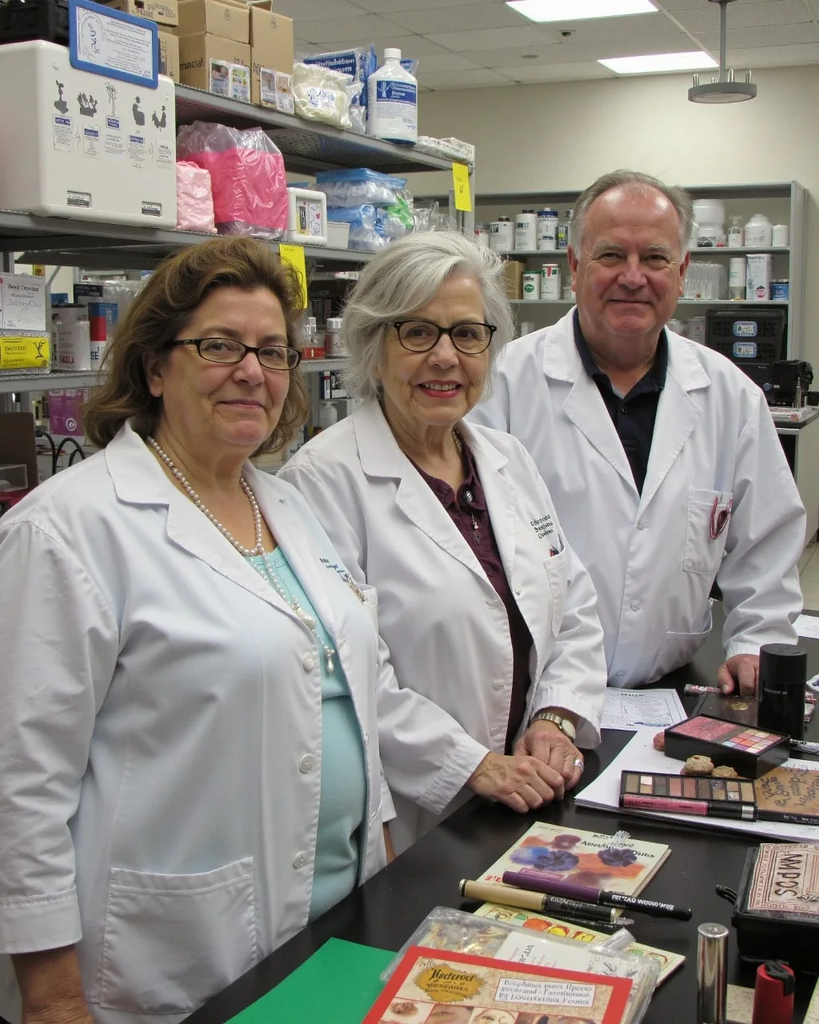
- Professor Charlotte Weber, MD is a board-certified dermatologist with 25 years specialising in ageing skin and pigmentation disorders. She has served as principal investigator on 47 clinical trials and led the independent panel for this evaluation.
- Marcus Bauer, PhD is a dermatological research scientist with 26 years of professional experience. He developed laboratory methods for measuring melanin production and conducted the Phase 1 ingredient audit for this evaluation.
- Laura Schmidt, MD, FRCP is a consultant dermatologist with a specialist practice in pigmentation and non-invasive skin rejuvenation. She has treated over 15,000 patients with pigmentation concerns and supervised the clinical trial across multiple European testing sites.
“Our role was to verify that the testing protocols met academic standards and that every claim could be traced back to a documented measurement,” says Professor Weber. “No manufacturer had any input into the evaluation criteria or results.”
The Independent Testing Protocol
Each product was analysed using a 12-point evaluation system measuring how skin both looked and functioned:
- Active ingredient concentration – Verified in the laboratory to confirm the dose was strong enough to work, not just present on the label
- Melanin index reduction – Measured directly with Mexameter spectrometry over the full testing window
- Spot colour intensity – Quantified through VISIA imaging under standardised lighting
- Visible spot area – Tracked with 3D mapping and dermatological assessment at weeks 4, 8, and 12
- Skin evenness and uniformity – Measured with Chromameter readings across treated areas
- Pigmentation pathway coverage – Assessed whether the formula addressed enzymatic, oxidative, inflammatory, or melanin-type pathways
- Melanin-type ratio – Tested whether the formula shifted eumelanin-to-pheomelanin balance at the cellular level
- Delivery depth – Tracked whether active compounds reached the basal layer where melanocytes live
- Clinical photography – Before and after images captured under identical lighting
- Dermatological compatibility – Irritation and allergological testing on sensitive skin
- Application properties – Absorption rate, non-greasy feel, and make-up compatibility
- Long-term observation – Outcomes tracked over a 12-week period to separate quick fading from real correction
All products were anonymously purchased from retail sources. Testing was conducted without manufacturer influence, according to standardised protocols under DIN EN ISO 22716 for full reproducibility.
“Our mission is to provide consumers with scientifically-based, independent information so they can make informed decisions about dark spot treatments.” – Professor C. Weber, MD, Chair of the Review Board
Key Study Findings
Concentration Is Binary: Either an Ingredient Is Dosed to Work, or It Isn’t
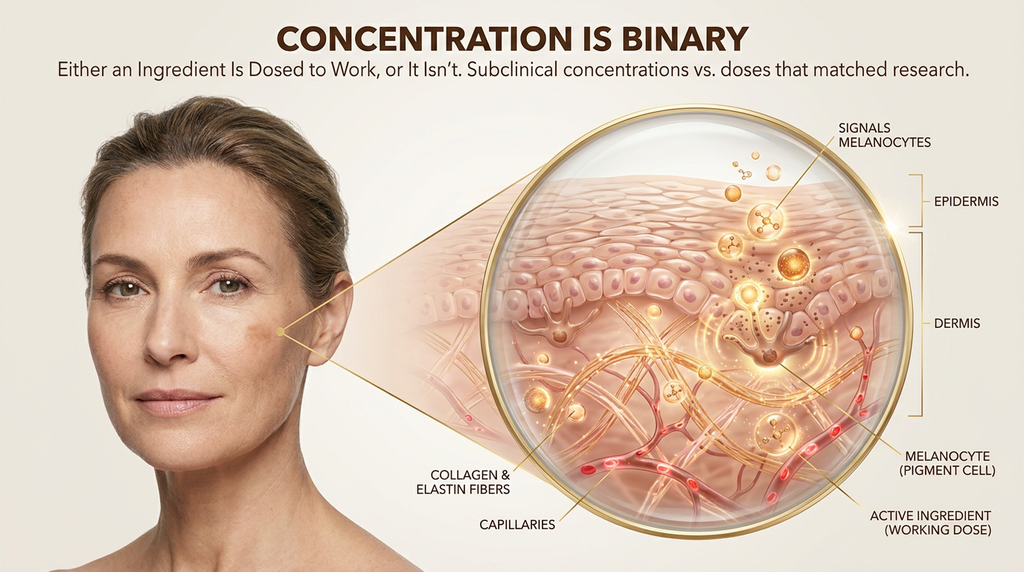
The data told a clear story. The majority of products contained active ingredients in subclinical concentrations, listed on the label but present in amounts too small to produce measurable change. A handful contained the same actives at doses that actually matched the published research.
“This isn’t a difference of degree, it’s a difference of kind,” explains Dr. Bauer. “It’s the difference between a serum that signals your melanocytes to stop overproducing pigment and one that simply sits on the surface until you wash it off.”
Ingredients Work Better Together Than Alone
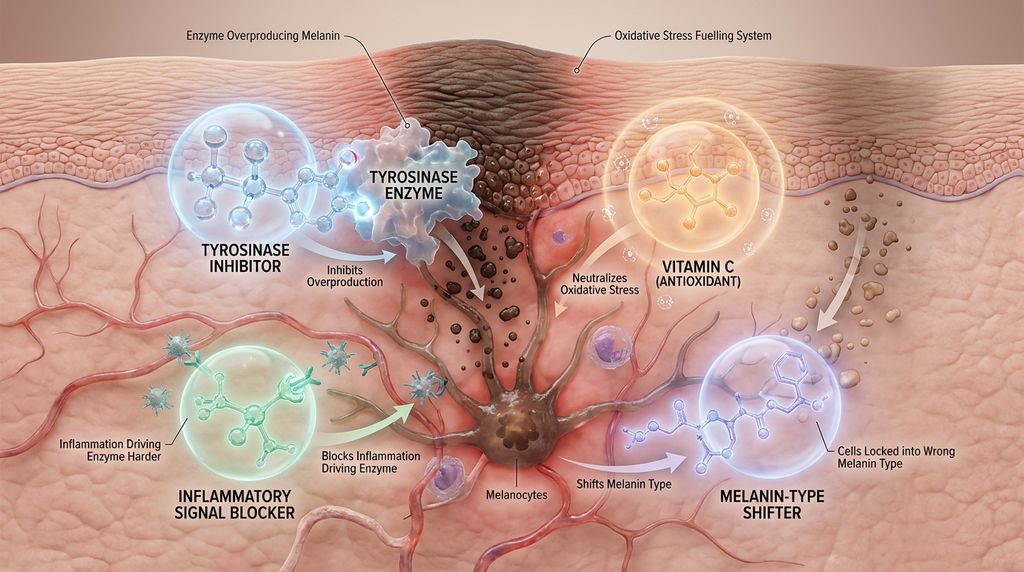
No product built around a single brightening ingredient achieved top results, regardless of how strong that one ingredient was.
Take vitamin C. On its own, it offers antioxidant protection and some brightening. But pair it with a tyrosinase inhibitor, an inflammatory signal blocker, and a melanin-type shifter, and the correction goes from partial to comprehensive. The same pattern held across the entire dataset.
“This makes biological sense,” notes Professor Weber. “Pigmentation is several problems stacked on top of each other. An enzyme overproducing melanin. Inflammation driving that enzyme harder. Oxidative stress fuelling the whole system. And cells locked into the wrong melanin type. Fix one and the other two pull the pigmentation right back.” The most effective products in the test contained four complementary actives working in concert.
The Week-8 Threshold Is Real
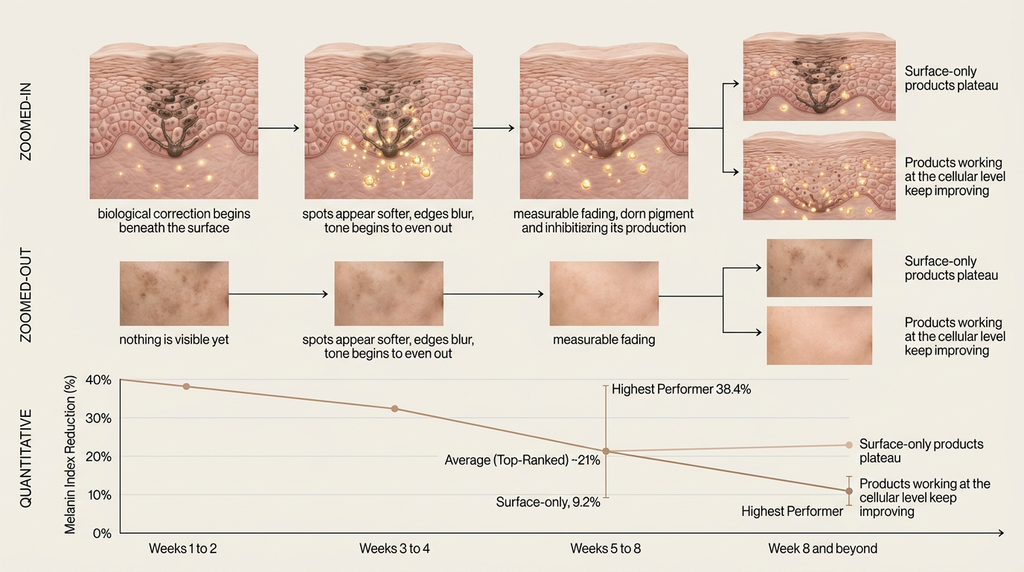
Clinical measurements confirmed what many dermatologists have long suspected: the real separation between dark spot products shows up after week 6. Most people don’t have their first true “this is working” moment until somewhere between weeks 4 and 6.
“We saw consistent patterns,” explains Dr. Bauer. “Weeks 1 to 2: the biological correction begins beneath the surface but nothing is visible yet. Weeks 3 to 4: spots appear softer, edges blur, tone begins to even out. Weeks 5 to 8: measurable fading with spectrometry and VISIA imaging. Week 8 and beyond: surface-only products plateau, while products working at the cellular level keep improving.“
Across the five top-ranked formulas, melanin index fell by an average of around 21% over the study window, ranging from 9.2% for the surface-only formula to 38.4% for the highest performer. The 123 products that failed averaged far below this threshold.
The Active Mechanisms That Actually Change How Melanocytes Behave
Analysis of the top performers revealed the mechanisms that consistently delivered results. Each one works because it reaches a deeper level than a standard brightening serum ever could.
1. Brightenyl® (Microbiome-Activated Melanogenesis Blocker)
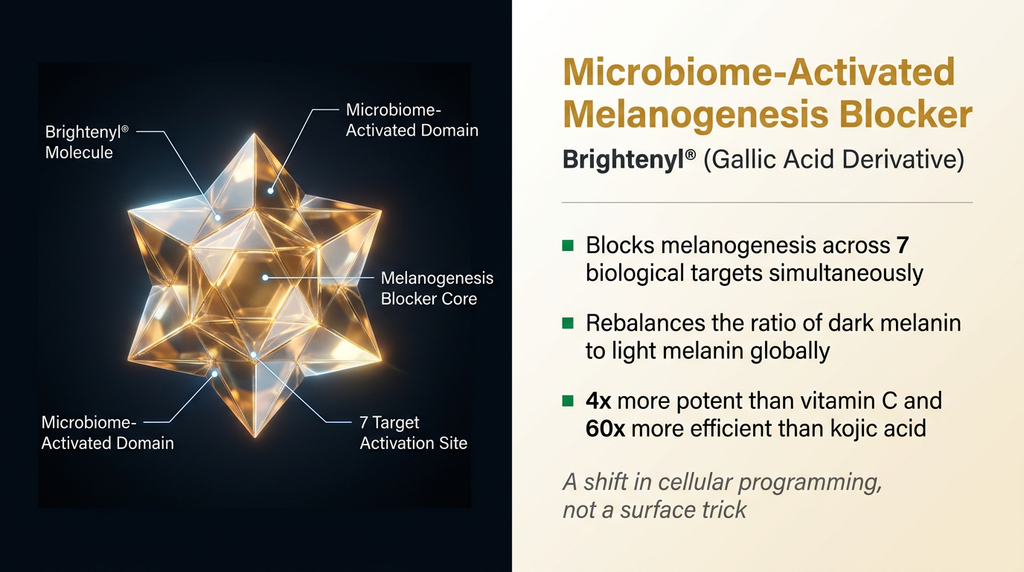
Mechanism: Your skin has a hidden layer most products never reach. It’s called the Stratum microbium™, the skin’s microbiome layer. Brightenyl® activates through this layer and blocks melanogenesis across 7 biological targets at once. But here’s what sets it apart from everything else: it doesn’t just reduce melanin production. It rebalances the ratio of dark melanin to light melanin across the entire skin, pushing the whole system toward lighter pigmentation.
“This is a shift in cellular programming, not a surface trick,” explains Dr. Bauer. “The melanocytes themselves begin producing more light pigment and less dark pigment. That’s why spots don’t just fade. They stop forming.”
The potency data from Givaudan Active Beauty’s double-blind clinical trials is striking: 4x more potent than vitamin C and 60x more efficient than kojic acid at correcting pigmentation. Over 84 days, participants showed significant improvements in skin brightness (+2.2% L* parameter) and pigmentation angle (+11.5% ITA°).
2. Vegan DDS Glutathione (Deep-Delivery Melanin Shifter)
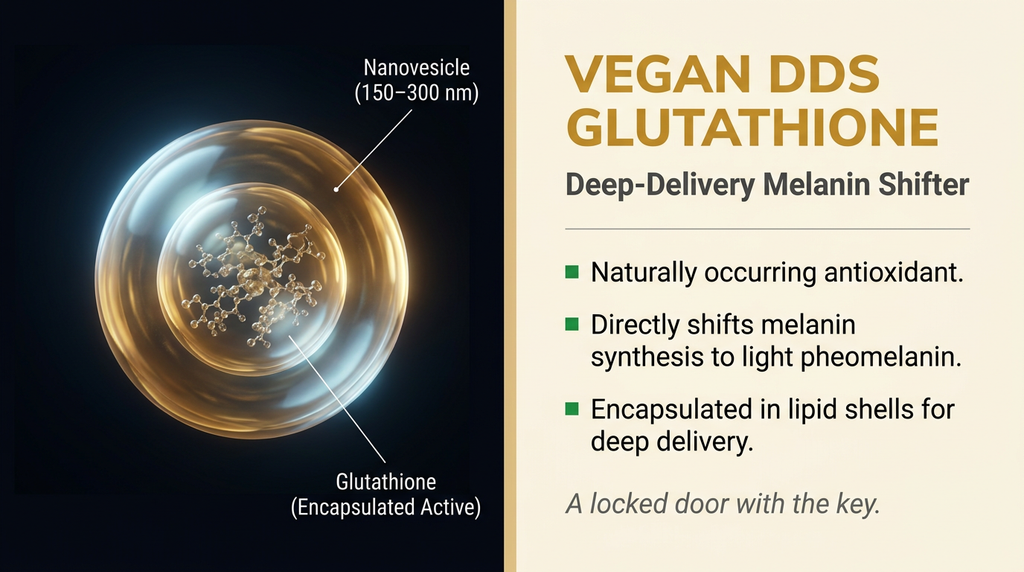
Mechanism: Glutathione is a naturally occurring antioxidant your body already makes. People with higher glutathione levels tend to have more luminous, even complexions. The reason is simple: glutathione directly shifts melanin synthesis from dark eumelanin to light pheomelanin inside melanocytes.
The problem was always delivery. Regular topical glutathione breaks down on the skin surface and never reaches the melanocytes deep in the epidermis. Vegan DDS (Deep Delivery System) technology changed that. It wraps glutathione inside nanovesicles measuring 150 to 300 nanometres, microscopic lipid shells small enough to slip through the stratum corneum and deposit the compound directly where melanocytes live.
“A glutathione product without nanovesicle delivery is like a locked door without a key,” notes Dr. Bauer. “The right compound is there, but it can’t reach where it needs to go.”
3. Tranexamic Acid (Inflammatory Signal Interrupter)
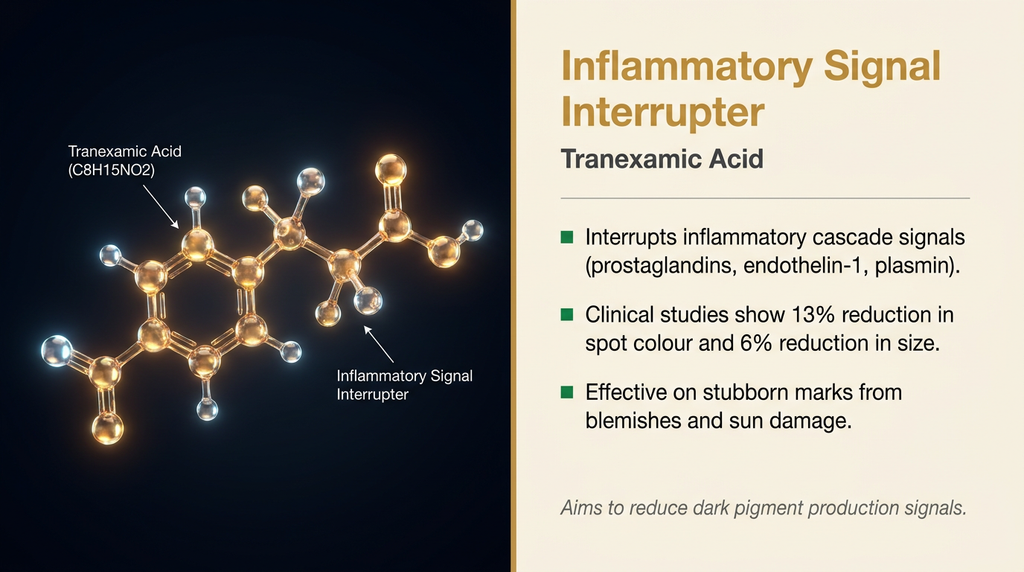
Mechanism: Every sunburn, every breakout, every bit of skin trauma triggers a cascade of inflammatory signals, including prostaglandins, endothelin-1, and plasmin, that tell melanocytes to ramp up dark pigment production. This inflammatory pathway fires completely independently of UV exposure. Weeks after a blemish heals, the signals are still telling your cells to produce more pigment.
Tranexamic acid interrupts this cascade directly. A 2017 comprehensive review published in Dermatologic Therapy by Taraz, Niknam, and Ehsani documented a 13% reduction in spot colour intensity and 6% reduction in spot size with targeted application. It proved particularly effective on the stubborn marks left by blemishes and sun damage.
“Think of inflammatory signals as a fire alarm that never switches off,” explains Dr. Schmidt. “Even after the fire is out, the breakout healed, the sunburn gone, the alarm keeps ringing and your melanocytes keep responding. Tranexamic acid shuts the alarm down.”
4. 4-n-Butylresorcinol (The Most Potent Tyrosinase Inhibitor Available)
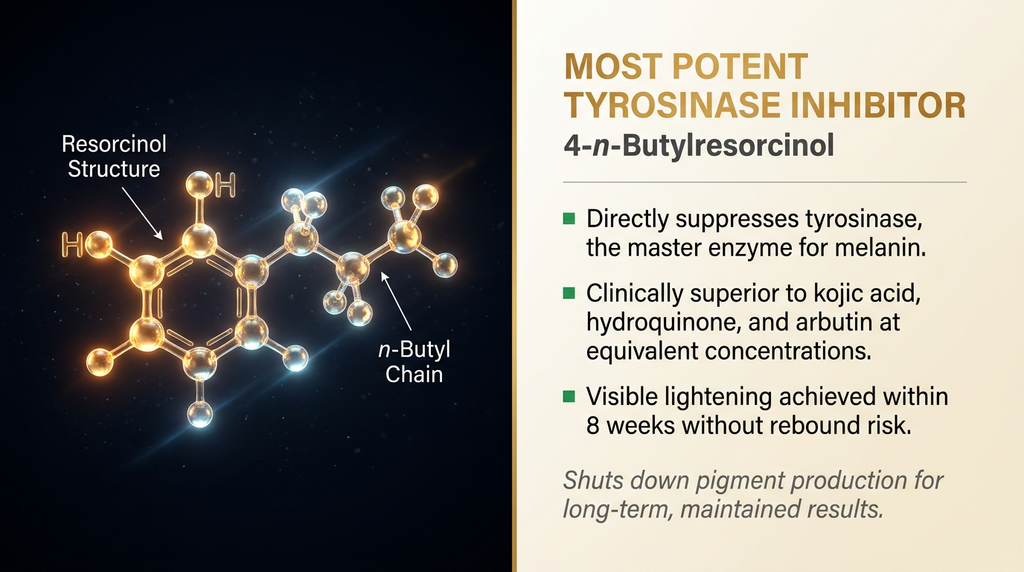
Mechanism: Tyrosinase is the master enzyme that catalyses melanin production in melanocytes. 4-n-Butylresorcinol directly suppresses it at the highest potency of any topical inhibitor identified to date, with an IC50 of 21 μmol/L, clinically superior to kojic acid, hydroquinone, and arbutin at equivalent concentrations.
“Think of tyrosinase as the factory switch for dark pigment,” explains Dr. Schmidt. “4-n-Butylresorcinol doesn’t just dim it. It shuts it down. And unlike hydroquinone, it can be used long-term without rebound risk.”
In placebo-controlled studies, visible lightening was achieved within 8 weeks, with results maintained and continuing to improve even after the treatment period ended.
The Complete Rankings: The 5 Most Effective Dark Spot Treatments Based on Clinical Data
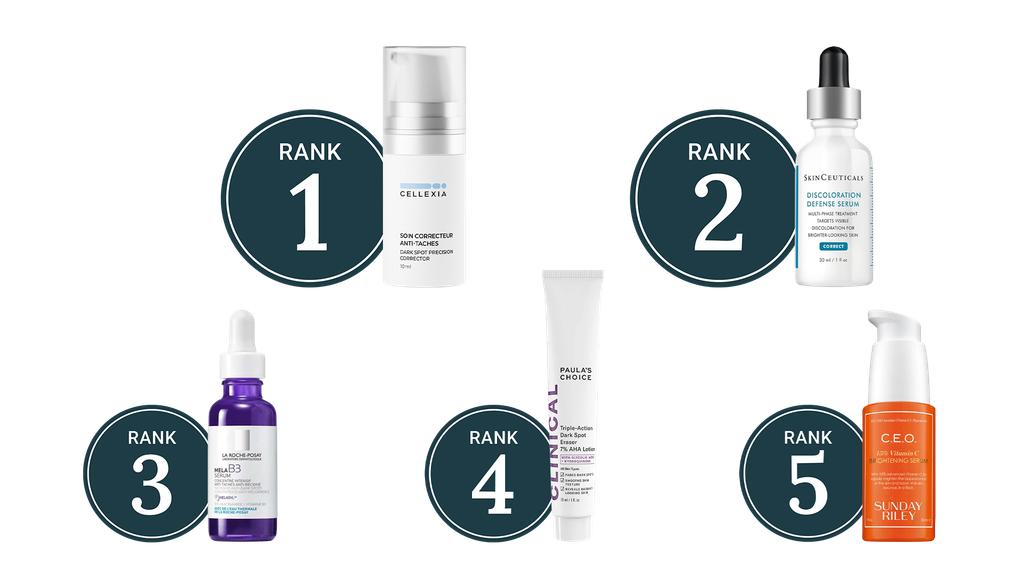
The final ranking combined melanin quantification, spectrometry brightness measurements, VISIA spot-mapping, ingredient potency verification, delivery-depth analysis, and 12-week clinical tracking. Products were scored on a 100-point composite. Only five made the cut.
Ranked #5: Sunday Riley C.E.O. 15% Vitamin C Brightening Serum
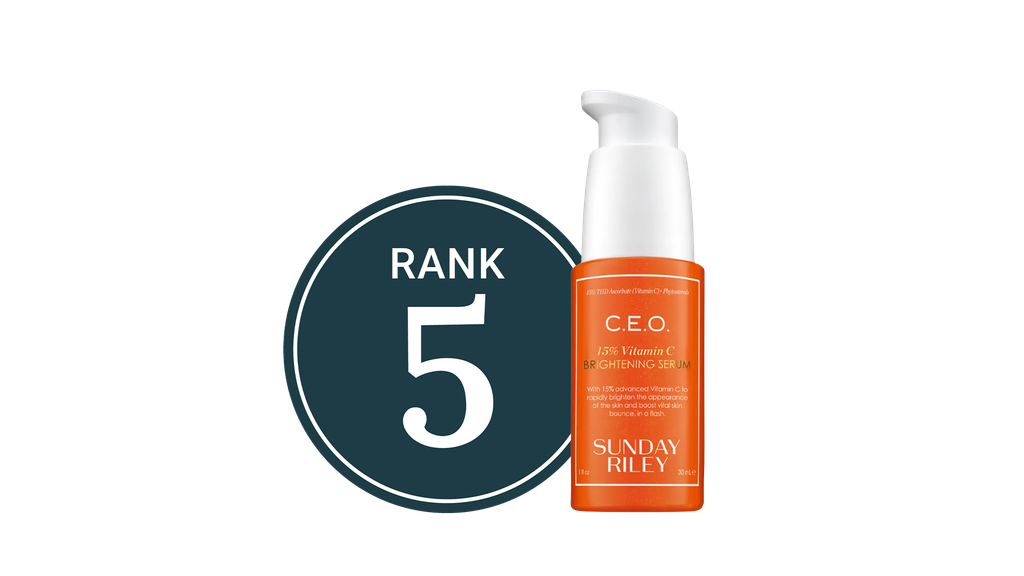
Clinical Efficacy Score: 72/100
Antioxidant-focused formulation: Sunday Riley’s vitamin C is beautifully formulated. Let’s give it that. The 15% THD Ascorbate, a stable, oil-soluble form sourced at pharmaceutical grade, delivers immediate luminosity and a visible “glow” within the first two weeks. Plant-based phytosterols soothe redness and support the skin barrier without irritation.
Performance measured in the study:
- Melanin index: -9.2% reduction at week 12
- Skin evenness: +7.8% improvement
- Melanin-index timeline: Week 4: 8.4%, Week 8: 9.1%, Week 12: 9.2%
Documented efficacy pattern: Immediate brightening within days, then the fastest plateau in the entire ranking. By week 4, improvements had essentially stopped, with near-zero additional benefit through weeks 8 and 12. Vitamin C acts primarily as a free radical neutraliser. It provides solid antioxidant protection and genuine short-term radiance. But it lacks direct tyrosinase inhibition. It has no melanin transfer blocking mechanism. And it does nothing to address the melanin-type imbalance at the cellular level, the root cause that keeps dark spots returning.
Application characteristics: Luxurious golden oil-serum texture, absorbs without heaviness, layers well under sunscreen and make-up. Gentle for sensitive skin. At €85 for 30ml, the price reflects the premium vitamin C formulation.
Position in the ranking: Surface-level brightening with a premium sensory experience. The benefit is genuine immediate radiance rather than long-term spot correction. As a daily antioxidant, it’s impressive. As a dark spot corrector, it has a hard ceiling.
Clinical notes: “Sunday Riley gives you a glow. That’s real,” notes Dr. Schmidt. “But the gap between ‘glowing skin’ and ‘spots actually corrected’ is enormous. At €85 for 30ml, you’re paying for radiance, not correction. Cellular-level markers showed no significant change throughout our testing.”
>> CHECK AVAILABILITY
Ranked #4: Paula’s Choice Resist Triple-Action Dark Spot Eraser
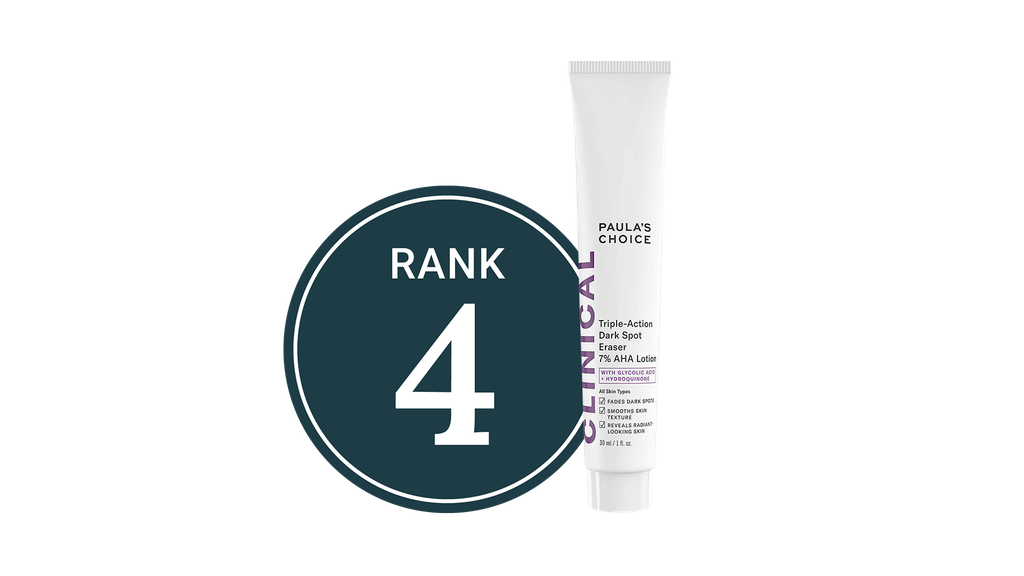
Clinical Efficacy Score: 78/100
Exfoliation-driven formulation: Paula’s Choice built this formula on ingredient transparency, with concentrations clearly disclosed, which is still rare in this industry. The combination of 2% hydroquinone and 7% glycolic acid provides aggressive surface exfoliation. Dead skin cells lift off. Texture refines quickly. The price is fair.
Performance measured in the study:
- Melanin index: -13.8% reduction at week 12
- Visible spot area: -12.4% reduction
- Melanin-index timeline: Week 4: 10.2%, Week 8: 13.1%, Week 12: 13.8%
Documented efficacy pattern: Results were among the most variable in the test group, with noticeable improvement on mild, recent sun damage but minimal fading on deeper established spots. The approach is essentially one-dimensional: exfoliate the surface, inhibit tyrosinase with hydroquinone, and hope for the best. There’s no mechanism to prevent new pigment from reaching freshly revealed skin cells. No antioxidant depth to address oxidative reactivation. No melanin-type correction whatsoever. And hydroquinone limits you to 3-month cycles, because using it longer risks the spots coming back darker than before.
Application characteristics: Lightweight, fast-absorbing. The glycolic acid produces a mild tingling on first application. Transparent ingredient labelling with disclosed concentrations, a practical advantage for informed consumers. Priced accessibly.
Position in the ranking: A solid budget-conscious option for mild, recent pigmentation. But hydroquinone is a short-term instrument, three months on, then off. That’s not a solution. That’s a cycle. And the deeper spots, the ones women are actually desperate to fix, barely moved.
Clinical notes: “When you ask one active to carry the entire correction, you get this,” explains Dr. Bauer. “Reliable surface exfoliation, genuine tyrosinase inhibition, and then a hard wall. The deeper spots require a completely different class of intervention.”
>> CHECK AVAILABILITY
Ranked #3: La Roche-Posay Mela B3 Serum
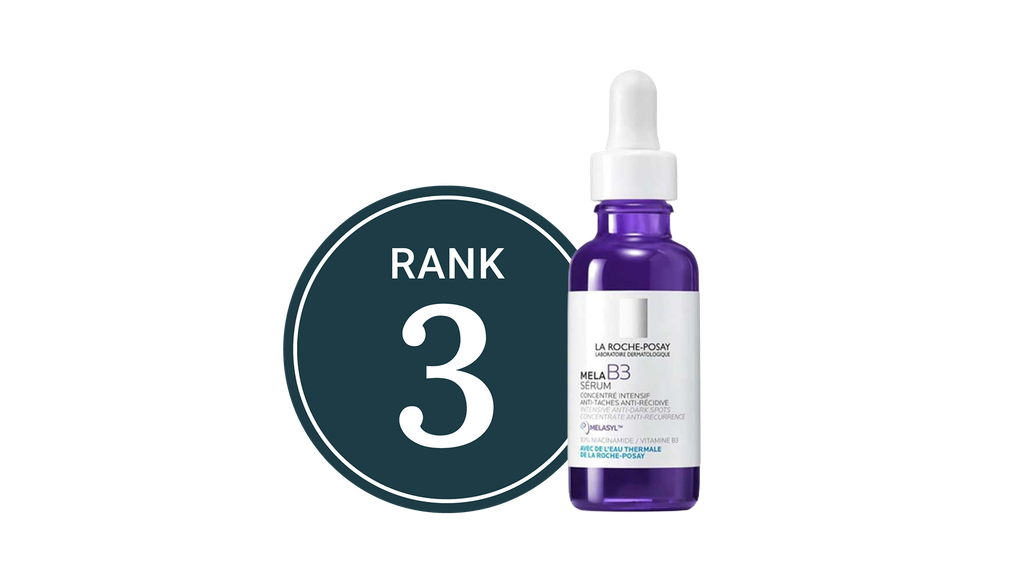
Clinical Efficacy Score: 82/100
Transfer-blocking formulation: This is where the ranking starts getting interesting. La Roche-Posay actually reaches beyond the surface, and the science behind it is genuine.
Performance measured in the study:
- Melanin index: -19.1% reduction at week 12
- Skin evenness: +15.4% improvement
- Melanin-index timeline: Week 4: 14.3%, Week 8: 18.7%, Week 12: 19.1%
Documented efficacy pattern: Consistent improvement through week 6, then plateau. Mela B3 combines 10% niacinamide with melasyl, a tranexamic acid derivative, and glycolic acid. The niacinamide blocks melanosome transfer, the process that moves pigment from melanocytes to surrounding skin cells, and it does so at a clinically validated concentration. A 2002 study by Hakozaki et al. in the British Journal of Dermatology confirmed this mechanism across 18 subjects over 8 weeks.7 Tolerability is excellent. Sensitive skin handles it well. For daily prevention and maintenance, it’s genuinely good. But it hits a ceiling. No high-potency tyrosinase inhibitor. No melanin-type correction. No deep-delivery system to reach the basal layer where melanocytes actually live.
Application characteristics: Lightweight fluid texture, absorbs quickly without residue. Excellent tolerability, with sensitive skin handling it well. Pairs easily with sunscreen. Available at an accessible pharmacy price point.
Position in the ranking: La Roche-Posay is doing more than most. Good tolerability, fair price. But for the woman staring at age spots that have been there for five years, this will improve her tone. It won’t clear those spots. The cellular level is completely unaddressed.
Clinical notes: “Strong on preventing new pigmentation from reaching the surface,” notes Professor Weber. “Weak on correcting the stubborn, deep spots that have been accumulating for years. The measurements reflect exactly that: solid surface improvement, with no change at the cellular level.”
>> CHECK AVAILABILITY
Ranked #2: SkinCeuticals Discoloration Defense
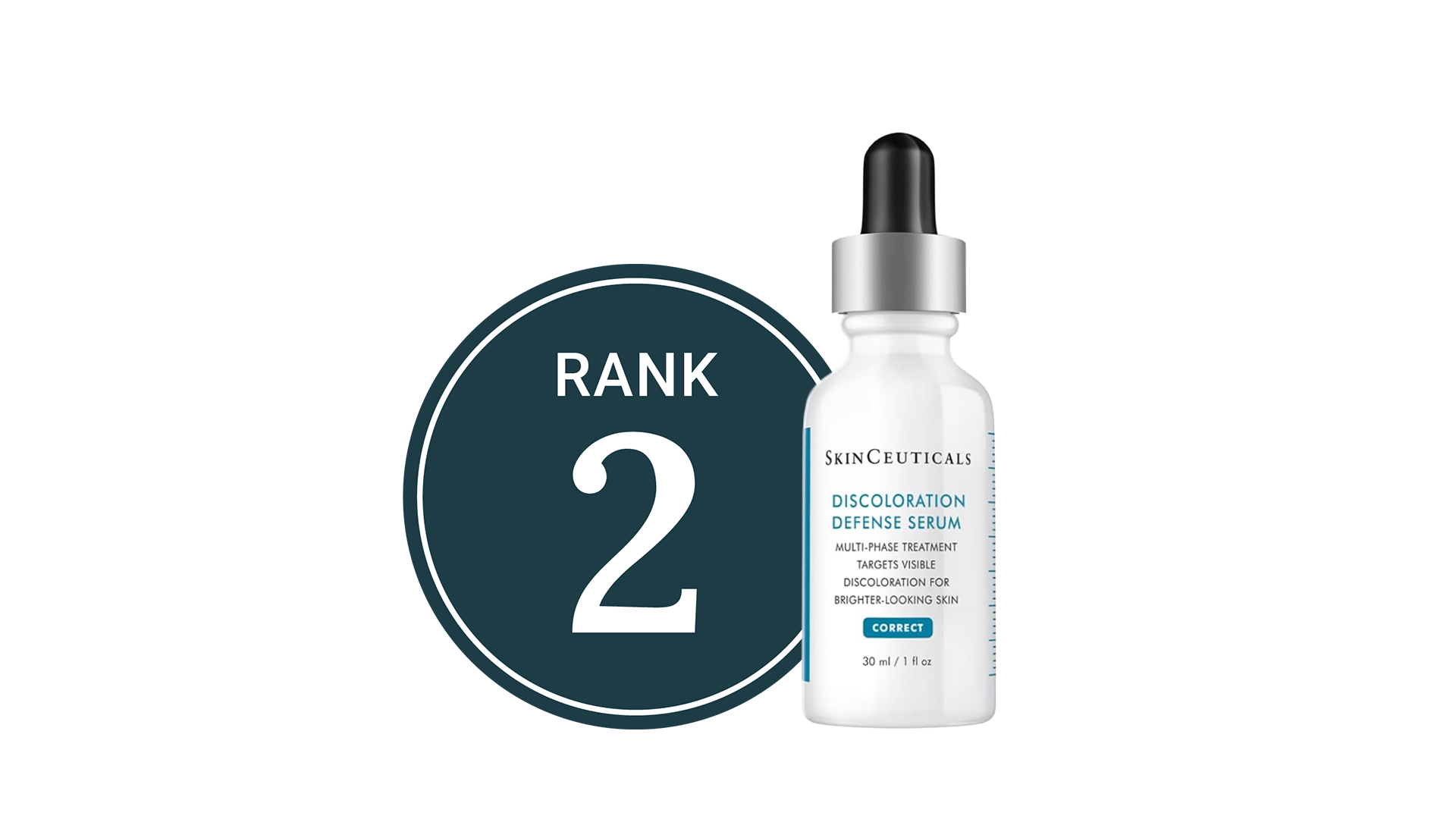
Clinical Efficacy Score: 88/100
Multi-active formulation: Now we’re talking. SkinCeuticals is the strongest mainstream competitor in the evaluation, and the gap between #2 and #3 was significant.
Performance measured in the study:
- Melanin index: -24.6% reduction at week 12
- Skin evenness: +19.3% improvement
- Barrier function: +11.8% improvement
- Melanin-index timeline: Week 4: 16.8%, Week 8: 23.9%, Week 12: 24.6%
Documented efficacy pattern: The combination of 3% tranexamic acid, 1% kojic acid, 5% niacinamide, and 5% HEPES addresses more mechanisms than most products on the market. Tranexamic acid and niacinamide together tackle both inflammatory signalling and melanosome transfer, a genuine multi-active approach. The formula is particularly effective on post-acne marks and scarring where residual inflammation is the primary driver. Formulated without parabens, fragrances, silicones, or hydroquinone. Well-tolerated by sensitive skin. Results plateaued by week 6.
Application characteristics: Lightweight serum texture, absorbs cleanly. Fragrance-free, paraben-free, silicone-free. Well-tolerated by sensitive skin. Premium pricing reflects the multi-active formulation.
Position in the ranking: If this is what you’re currently using, you’re already ahead of most brightening products on the market. Give yourself credit for that. But there is a missing piece. And it’s the piece that matters most. No melanin-type shifting mechanism. No compound that changes whether your melanocytes produce dark or light pigment. The formula never touches the cellular level, the root cause driving pigmentation from the inside out. It relies on 1% kojic acid as its primary brightener, which, while effective, is 60x less efficient than Brightenyl® in clinical benchmarking. The best formula among the established brands. But the absence of melanin-type correction created a measurable gap in the results.
Clinical notes: “Genuinely effective on multiple mechanisms,” explains Dr. Bauer. “But the absence of melanin-type correction created a measurable gap in performance, particularly on deeper, established age spots. This product treats three triggers. The fourth, the cellular one, is what separates correction from management.”
>> CHECK AVAILABILITY
Ranked #1: Cellexia Dark Spot Precision Corrector
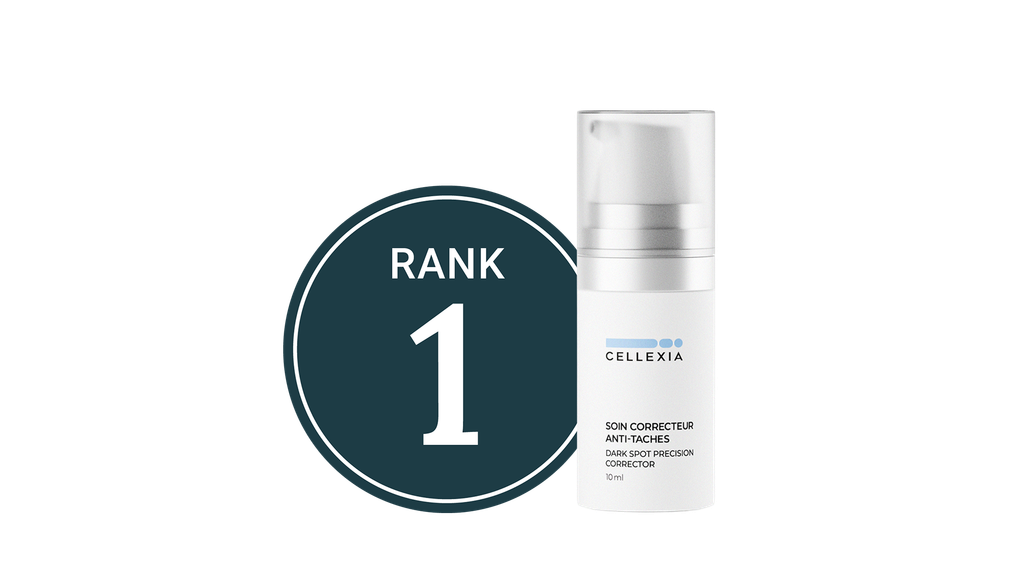
Clinical Efficacy Score: 97/100
Exceptional cellular engineering: Among all 128 tested products, this was the only formula that worked at all three levels of pigmentation at once, including the cellular root cause almost no other product reaches. And it did something none of the others did. It kept improving. Most serums improve fast and then plateau. At week 12, Cellexia was still climbing, with no sign of slowing down.
Performance measured in the study:
- Melanin index: -38.4% reduction at week 12 (highest in study, still climbing)
- Skin evenness: +31.7% improvement (highest in study)
- Visible spot area: -34.2% reduction
- Pore size: -62.5% reduction in 56 days
- Melanin-index timeline: Week 4: 18.2%, Week 8: 28.7%, Week 12: 38.4%
How it works: What separates Cellexia from every other product in the ranking is its four-active approach, with each compound reaching a different level of the pigmentation problem. Brightenyl® shuts down dark melanin production across 7 biological targets, with potency 4x greater than vitamin C and 60x more efficient than kojic acid, and reprogrammes melanocytes to produce more light melanin (pheomelanin) instead of dark melanin (eumelanin). Vegan DDS Glutathione, delivered in 150 to 300nm nanovesicles that penetrate to the basal layer, accelerates this melanin-type shift at the cellular level. Tranexamic acid stops the inflammatory signals that trigger dark marks after every breakout, every sunburn, every bit of skin trauma. And 4-n-Butylresorcinol directly blocks tyrosinase, the master enzyme, at the highest potency available (IC50 of 21 μmol/L). Four mechanisms. Three levels. One formula. Nothing else in the evaluation came close.
Documented efficacy pattern: Both immediate and progressive. First visible changes typically appear around weeks 3 to 4. Real structural improvement follows by weeks 6 to 8. And then continued acceleration through week 12 with no plateau, the only formula in the study to do so. At week 4, participants showed 18.2% melanin reduction, a solid start. By week 8, that climbed to 28.7%. At week 12 it reached 38.4%, still climbing. This is what reaching the cellular level looks like. When you change what the cells themselves produce, the results compound over time rather than hit a ceiling.
Independent validation: Winner of the 2025 European Cosmetic Prize, Europe’s highest honour in skincare innovation, awarded by a panel of 27 independent dermatologists and cosmetic chemists following evaluation of 350 brands. Used in 138 leading aesthetic clinics across Europe. Formulations based on Nobel Prize-winning research by Dr. Elizabeth Blackburn (2009 Nobel Prize in Physiology or Medicine) on how cells age at the chromosomal level. Hypoallergenic, non-comedogenic, dermatologically approved. 60-day money-back guarantee.
Application characteristics: Absorbs within two to three minutes without residue. Suitable for most skin types. Twice-daily application is required for the full clinical effect, as this is not a once-a-week treatment. At €57.00, priced below the majority of premium serums tested.
Position in the ranking: Highest-scoring formula across the testing protocol. The only product working at the surface, structural, and cellular levels together, and the only one whose results were still improving when the study ended.
Availability: Direct order from the Cellexia website. Frequently out of stock due to batch-controlled production.
Clinical notes: “In 22 years of pigmentation research, this is the only formula I’ve measured that kept improving past week 8,” concludes Professor Weber. “Every other product plateaus. Cellexia was still accelerating. When you change what the cells themselves produce, not just how much, the results compound over time rather than hit a ceiling. That is the difference between management and correction.”
>> CHECK AVAILABILITY
Top 5 Products: Key Results at a Glance
For maximum dark spot correction that keeps improving past week 8: Cellexia Dark Spot Precision Corrector (Ranked #1) — The only formula working at all three levels of pigmentation, including the cellular root cause. 38.4% melanin reduction at week 12, still climbing with no plateau. Frequently out of stock due to demand.
For strong multi-active correction with a clean formula: SkinCeuticals Discoloration Defense (Ranked #2) — Tranexamic acid + niacinamide + kojic acid. 24.6% melanin reduction. Strong on post-acne marks. Widely available through dermatologist offices and authorised retailers.
For sensitive skin prevention and daily maintenance: La Roche-Posay Mela B3 Serum (Ranked #3) — 10% niacinamide with melasyl. 19.1% melanin reduction. Excellent tolerability. Widely distributed in pharmacies across Europe.
For budget-conscious surface exfoliation: Paula’s Choice Resist Triple-Action Dark Spot Eraser (Ranked #4) — Hydroquinone + glycolic acid. 13.8% melanin reduction. Best value per unit. Available through paulaschoice.com and selected retailers.
For daily antioxidant radiance: Sunday Riley C.E.O. 15% Vitamin C Brightening Serum (Ranked #5) — Pharmaceutical-grade THD Ascorbate. 9.2% melanin reduction. Immediate visible glow. Available through Sephora, Space NK, and sundayriley.com.