
Isla Fenwick, Features Reporter.
She catches her reflection in the lift mirror at half past eleven and barely recognises the sleek style from earlier that morning. By lunchtime the ends have curled back, the crown has lifted, and there is a halo of frizz exactly where the air conditioning vents blow. The flat iron sits on the bathroom shelf next to three half-used heat sprays, each promising to fix this. The truth is simpler than the shelf suggests. Most reversion has little to do with which iron is used and everything to do with how hair is prepared, sectioned and cooled before it ever meets the plates. A 2019 study in the International Journal of Cosmetic Science found that straightened hair reverts fastest once humidity reforms the hydrogen bonds holding the new shape, which is a chemistry problem, not a shopping problem. This guide walks through the method that actually holds, step by step, without recommending a single product.
- Hair reverts because of chemistry, not bad luck: humidity reforms the hydrogen bonds a flat iron temporarily breaks, so sealing and cooling matter as much as heat.
- One slow, deliberate pass does more than five quick ones: repeated heat exposure on the same section is a common cause of both frizz and breakage.
- Section size decides the finish more than the device does: sections wider than about 2.5cm rarely get even heat all the way through.
Why Straightened Hair Reverts By Midday
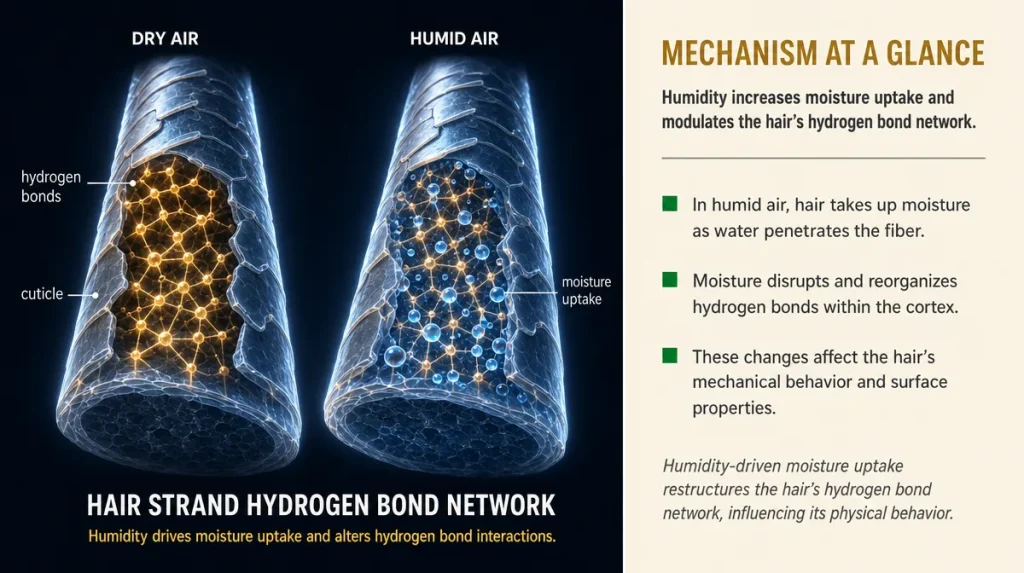
Hair is mostly keratin, a protein held together by hydrogen bonds and a few stronger disulfide bonds. Heat from a flat iron temporarily breaks the weaker hydrogen bonds, letting the strand reshape, and as it cools the bonds reform in the new, straighter position. This is the same basic chemistry behind ironing a cotton shirt: heat and pressure let the fibres settle into a new shape, and the shape holds only until moisture gets back in.
That is the catch. Hydrogen bonds are sensitive to water, including the water vapour in humid air or sweat near the hairline. A 2019 study in the International Journal of Cosmetic Science tracked straightened hair samples across varying humidity and found reversion accelerated sharply once ambient moisture crossed a certain threshold, with curl returning within hours rather than days. This is why a style can look perfect leaving the bathroom and limp by the time the lift doors open: the air itself is slowly undoing the chemistry.
Sealing the cuticle with a light, even pass and allowing the hair to cool fully in its new position before touching it again gives the bonds more time to set. Pinning sections flat against the head for a minute after straightening, rather than letting them hang loose and warm, is a small habit that makes a measurable difference in how long the result holds.
Matching Heat To Hair Thickness
Fine, colour-treated hair and thick, coarse hair do not need the same temperature, yet many people set an iron once and never adjust it again. General guidance from dermatology bodies such as the American Academy of Dermatology is to use the lowest heat that achieves the result, since damage risk rises with both temperature and the number of passes over the same section.
A simple self-test helps here. Take one strand from the most stubborn part of the head, usually the back or the crown, and run the iron over it once at a moderate setting. If it straightens cleanly on the first pass, that is the right temperature. If it needs two or three passes to lie flat, the temperature is too low for that hair’s thickness, not the iron’s fault.
Fine or lightened hair usually styles well on the cooler end of a device’s range, while dense, coarse or very curly hair often needs the upper end to achieve a lasting result in a single pass. Hair that has been chemically treated, including colour or relaxing services, behaves more like fine hair for these purposes, since the internal bonds are already weaker.
Checking the iron’s actual plate temperature once, rather than trusting the dial alone, is worth doing. Some devices drift several degrees from the number shown, particularly older ones, and a pharmacy-bought infrared thermometer settles the question in seconds.
Sectioning For An Even Result
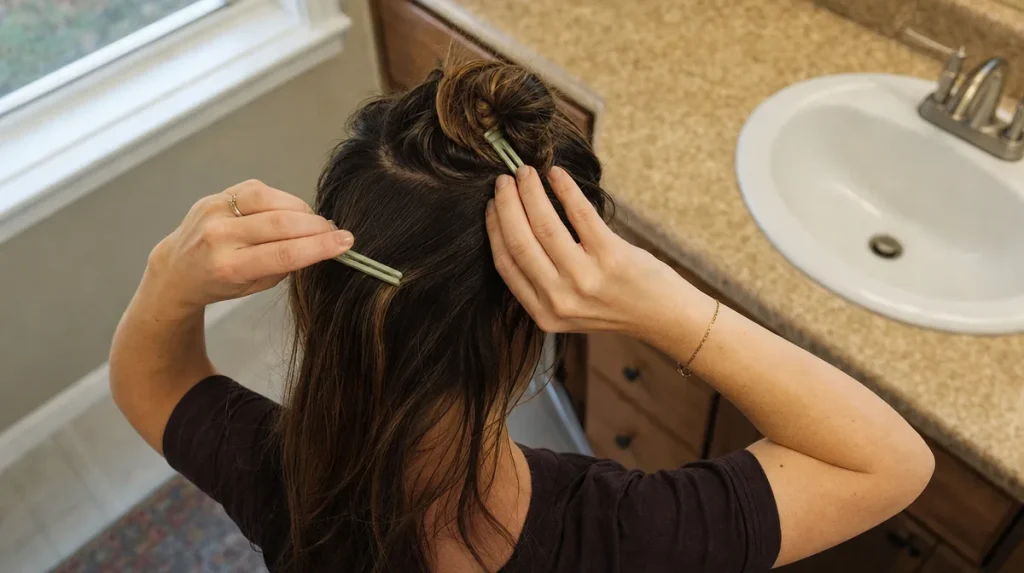
A whole head of hair clamped in wide handfuls will never straighten as evenly as hair divided into clean, manageable sections, for the same reason a shirt collar presses better than a bundled sleeve: heat needs direct, even contact to do its work.
Sections wider than about 2.5 centimetres are the most common reason a style looks straight at the surface but frizzy underneath. The outer layer gets the heat; the hair packed inside barely feels it. Working in sections roughly the width of two fingers, clipped out of the way until needed, lets every strand in that section meet the plates directly.
Starting at the nape and working upward keeps already-styled sections out of the heat path and stops them from being re-ironed by accident, which is one of the quieter causes of cumulative damage. It also means the top layer, the part everyone actually sees, gets styled last and stays cleanest.
Combing each section through just before clamping it removes tangles that would otherwise force a second or third pass. This single step, more than any product, is what separates a clean, salon-looking result from a rushed one.
One Slow Pass Beats Five Fast Ones
Running a flat iron quickly over a section five times feels efficient, but it exposes that hair to five separate heat events instead of one. Each pass raises the cuticle’s temperature again, and cumulative heat exposure is one of the clearest predictors of dryness and breakage in the styling literature, independent of which device applies it.
A single slow pass, taking roughly two to three seconds to travel from root to tip at the correct temperature for that hair type, achieves a cleaner result with far less cumulative stress. The habit of re-clamping a stubborn section over and over usually means the temperature was too low to begin with, not that the section needs more heat exposure.
Think of searing food in a pan. One confident pass at the right heat sets the surface cleanly. Pressing the same spot down repeatedly, lifting and reapplying, just dries it out without improving the result. Hair behaves similarly: the damage is cumulative, and the fix is correct heat and patience, not repetition.
The Order That Causes Frizz By Lunchtime
Most midday frizz traces back to decisions made before the iron ever touched the hair. Styling hair that is not completely dry is the single most common mistake: trapped moisture turns to steam under the plates, which can leave the cuticle rougher than it started and shortens how long the style holds.
Skipping a heat protectant is another frequent shortcut. Clinical pharmacists who work on topical product safety often point out that many protectant sprays rely on well-studied silicone or polymer technology rather than anything exotic, and skipping this step for the sake of speed tends to cost more time later in touch-ups.
Over-handling is the third habit worth breaking. Running fingers through freshly straightened hair before it has fully cooled reintroduces warmth and movement right when the bonds are trying to set. Letting a section rest, untouched, for even thirty seconds after styling makes a visible difference by the end of the day.
Finally, reaching for the iron on hair already damaged by a previous heat session compounds the problem. Dry, porous ends grab heat unevenly and frizz first, regardless of how carefully the rest of the routine is followed.
What A Heat Protectant Is Actually Doing
A heat protectant does not stop heat from reaching the hair. What a well-formulated one does is slow the rate at which heat transfers into the strand and cushion the cuticle against moisture loss, somewhat like an oven glove does not block heat entirely but buys enough time to handle a hot tray safely.
Most effective formulas rely on silicone or polymer films that coat the cuticle, the kind of formulation chemistry regularly presented at International Federation of Societies of Cosmetic Chemists congresses. The presence of one of these ingredients on a label matters far more than marketing language like thermal shield or heat armour, terms that describe a benefit without specifying how it is achieved.
A light, even layer works better than a heavy one. Over-applying protectant spray can leave a residue that the iron then partially cooks onto the hair, producing a dull, slightly gummy finish rather than shine. Two to three light passes of a spray, focused on the mid-lengths and ends where hair is oldest and most porous, is usually enough.
Judging Whether A Style Is Actually Holding
It helps to check a style at a fixed point rather than constantly. A touch test two hours after styling, pressing a section lightly between two fingers, tells more than glancing in a mirror every twenty minutes, which mostly just invites fidgeting that undoes the work.
A style that was prepared well, dried fully, sectioned cleanly and cooled properly, typically holds its core shape for a full day in moderate conditions, with some natural softening at the roots as new hair grows in slightly wavy at the base. Visible frizz returning within the first hour usually points back to incomplete drying or a missed protectant step, not a flaw in the method overall.
In humid or heated indoor air, expect the hold to shorten. This is a reasonable trade-off to plan for rather than a failure of the routine: a touch-up pass on just the crown, rather than restyling the whole head, usually restores the look without repeating the full heat exposure.
Keeping The Shape Between Full Styling Days
Sleeping on a style and expecting it to look identical the next morning is unrealistic, but a few habits extend it meaningfully. Swapping a cotton pillowcase for a smoother fabric such as silk or satin reduces the friction that roughs up the cuticle overnight, a detail increasingly covered in consumer hair-care guidance.
Loosely wrapping the hair or securing it in a low, soft pin at the crown before bed keeps the style from creasing where a tight band would sit. A light mist of dry shampoo at the roots the next morning absorbs oil without adding weight, which matters because oily roots make hair look flatter and emphasise any lift that has crept back in.
For longer stretches between wash days, a quick touch-up with the iron on just the root area, rather than the full length, refreshes the look with a fraction of the heat exposure a full restyle requires. This single adjustment, more than any new purchase from the pharmacy or a beauty hall, is what makes a straightening routine sustainable day to day rather than a fresh project every morning.
Key Takeaways
- Reversion is chemistry, not misfortune: humidity reforms the hydrogen bonds heat temporarily breaks, so cooling and sealing matter as much as the heat itself.
- Match temperature to hair thickness using a one-strand test rather than a fixed dial setting.
- Keep sections to about two fingers wide for even heat contact all the way through.
- One slow pass beats several fast ones; repetition is what accumulates damage.
- Hair must be fully dry before styling, and a light, even layer of heat protectant does more than any amount of extra heat.
- Judge results with a fixed touch test rather than constant checking, and expect humid or heated air to shorten the hold.
- Protect the result overnight with a smooth pillowcase fabric and refresh only the roots between full styling sessions.
A Quick Checklist Before You Reach For The Iron
- Hair completely dry, no damp patches at the roots or nape
- Light, even layer of heat protectant applied and allowed to settle
- Sections no wider than two fingers, clipped and ready
- Plate temperature matched to hair thickness, confirmed with a one-strand test
- One slow pass per section, not repeated passes
- Each section cooled before being touched or brushed through
- Touch-up plan ready for humid or heated indoor conditions
This article is for general information and does not replace personalised advice from a dermatologist or qualified hair professional.
Individual results vary depending on hair type, condition and styling habits.